


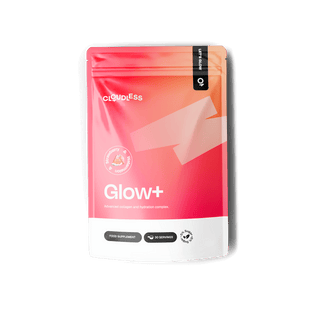
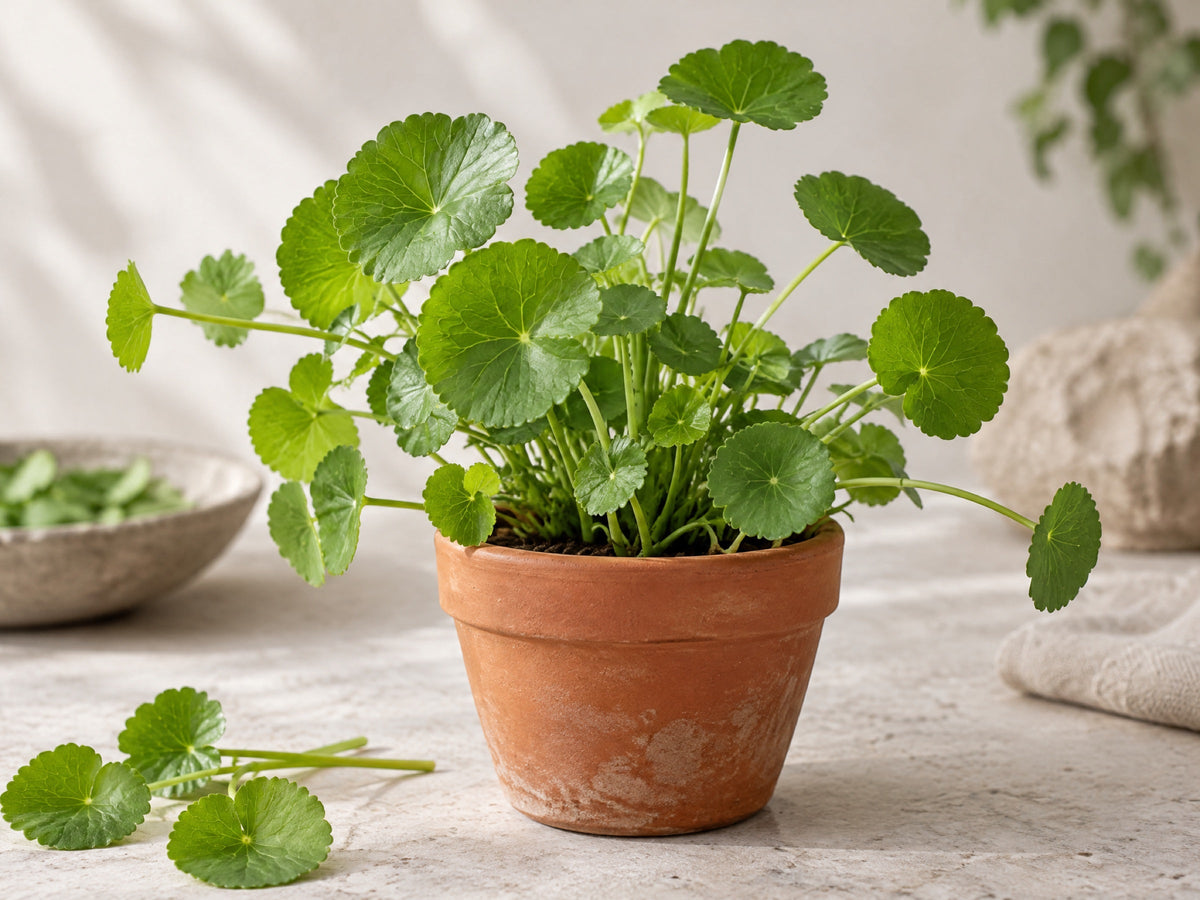
Short answer: gotu kola (Centella asiatica) is a plant from Asia that people have eaten and used for generations. In Europe, you may know it as “cica” in skincare. Gotu kola is of interest for circulation because of a group of plant compounds called triterpenes. Glow+ contains 500 mg of gotu kola per scoop.
Gotu kola is one of those plants you suddenly see everywhere. On a supplement label, in your face cream as “cica”, or in a salad at an Asian restaurant. But what exactly is it? And what does a plant with round leaves have to do with your circulation? Here’s a straightforward explanation, plus what you can do for your circulation every day.
At a glance
- Gotu kola is a plant with round leaves, used as a vegetable and herb in Asia.
- In skincare, it’s called “cica”.
- Its best-known compounds are triterpenes, including asiaticoside.
- Movement is still the foundation of good circulation.
- Glow+ contains 500 mg of gotu kola per scoop.
What is gotu kola?
Gotu kola is a small, creeping plant with round, slightly wavy leaves. It grows in damp places in tropical and subtropical regions, including India, Sri Lanka, China and Indonesia. Its botanical name is Centella asiatica. You may also hear it called Indian pennywort or tiger grass.
There’s a story behind the name tiger grass. According to legend, injured tigers would roll in the plant. No one knows whether that’s true, but the name stuck.
One thing to know: gotu kola has nothing to do with the kola nut used in cola. The names sound similar, but they’re completely different plants. Gotu kola contains no caffeine.
From food to face cream
Across much of Asia, gotu kola is simply food. In Sri Lanka, it’s made into a fresh salad called gotu kola sambol, with coconut, onion and lime. In Thailand and Vietnam, people drink it as a juice or tea. It also has a longstanding place in traditional Indian and Chinese herbal practices.
In Europe, gotu kola became best known through skincare. Creams with “cica” in the name contain gotu kola extract. The word comes from “cicatrice”, the French word for scar.
What’s in gotu kola?
The compounds scientists are most interested in are called triterpenes. They’re a group of plant compounds found in other herbs too. The best-known one in gotu kola is asiaticoside. Together with a few related compounds, it’s part of what makes gotu kola distinctive.
Gotu kola at a glance
- Botanical name
- Centella asiatica
- Origin
- Tropical Asia
- Best-known compound
- Asiaticoside
- In skincare
- “Cica”
- In Glow+
- 500 mg per scoop
Gotu kola is not related to the kola nut and contains no caffeine.
The amount of these compounds varies between plants, growing locations and processing methods. That’s why researchers and manufacturers often use an extract: a concentrated form with a set amount per serving.
How does your circulation work?
To understand where gotu kola comes in, it helps to know how your circulation works. Your heart pumps blood through your arteries to every part of your body. It travels through smaller and smaller vessels until it reaches the capillaries. These are your tiniest blood vessels, thinner than a hair. This is where your blood delivers oxygen and nutrients to your cells, including those in your skin.
Then the blood has to get back to your heart through your veins. From your legs, that’s quite a journey: the blood has to move upwards against gravity. Two things help it along:
- Valves in your veins. They open as blood flows upwards and close to stop it flowing back down.
- Your calf muscles. Every time you walk, your calf muscles squeeze your veins and push the blood upwards. That’s why they’re sometimes called the calf muscle pump.
When you sit or stand still for a long time, that pump does less work. That’s why your legs can feel heavy after a long flight, a day at your desk or a hot day.

Why do your legs sometimes feel heavy?
Almost everyone knows the feeling of heavy, tired legs. A few things can make it worse:
- Standing or sitting for a long time. Your calf muscle pump is barely moving.
- Heat. In warm weather, your blood vessels widen, and fluid can collect around your ankles more easily.
- Hormones. Many women notice it more in the days before their period or during pregnancy.
- Age. As you get older, the walls and valves in your veins become less firm.
- Family history. If your parents have varicose veins, you’re more likely to develop them too.
Gotu kola and your circulation
Gotu kola supports venous and peripheral circulation.* Venous refers to your veins, the blood vessels that carry blood back to your heart. Peripheral refers to blood vessels further from your heart, such as those in your arms, legs and skin.
Scientists are particularly interested in the triterpenes in gotu kola. These feature in many studies, usually as an extract containing a set amount.
Good circulation matters for your skin because your blood delivers oxygen and building blocks to it. That’s why gotu kola is in Glow+, alongside building blocks for your skin, hair and nails.
What you can do for your circulation
Movement is the foundation. These simple habits can make a difference, and they cost nothing:
- Walk every day. Walking, cycling and taking the stairs get your calf muscle pump working.
- Don’t sit still for too long. Get up every half hour, or move your feet up and down under your desk.
- Put your legs up. At the end of the day, resting your legs on the sofa or against a wall helps blood flow back towards your heart.
- Drink enough water, especially in warm weather.
- Don’t smoke. Smoking damages your blood vessels, including the tiny ones in your skin.
- Be mindful of heat. Your blood vessels widen in a hot bath or in summer. A cool shower over your legs can feel good afterwards.
What should you look for in a gotu kola supplement?
Gotu kola is appearing in more and more products. These details help you see what you’re buying:
- The botanical name. The label should say Centella asiatica, so you know it’s the right plant.
- The amount. Does it tell you how many milligrams are in a daily serving? With a vague “blend”, you can’t tell.
- Extract or powder. An extract is concentrated; ground leaves aren’t. The label should tell you which it contains.
- Testing. Plants can contain heavy metals and pesticide residues. A good brand has its products independently tested for these.
Is gotu kola safe?
Gotu kola has been eaten in Asia for generations. Most people tolerate the amounts found in supplements well. A few things to keep in mind:
- Pregnant or breastfeeding? Avoid supplements containing gotu kola, or speak to your midwife or doctor first.
- Have liver problems? There have been rare reports of liver problems associated with gotu kola use. If you have a liver condition, speak to your doctor first.
- Taking medication? Ask your pharmacist whether a gotu kola supplement is suitable for you.
- Stick to the daily serving. More isn’t better.
Where Glow+ fits in
Glow+ contains 500 mg of gotu kola per scoop. At its core are 8,000 mg of hydrolysed collagen and 500 mg of vitamin C. Vitamin C contributes to normal collagen formation for the normal function of skin. It also contains zinc, MSM and hyaluronic acid.
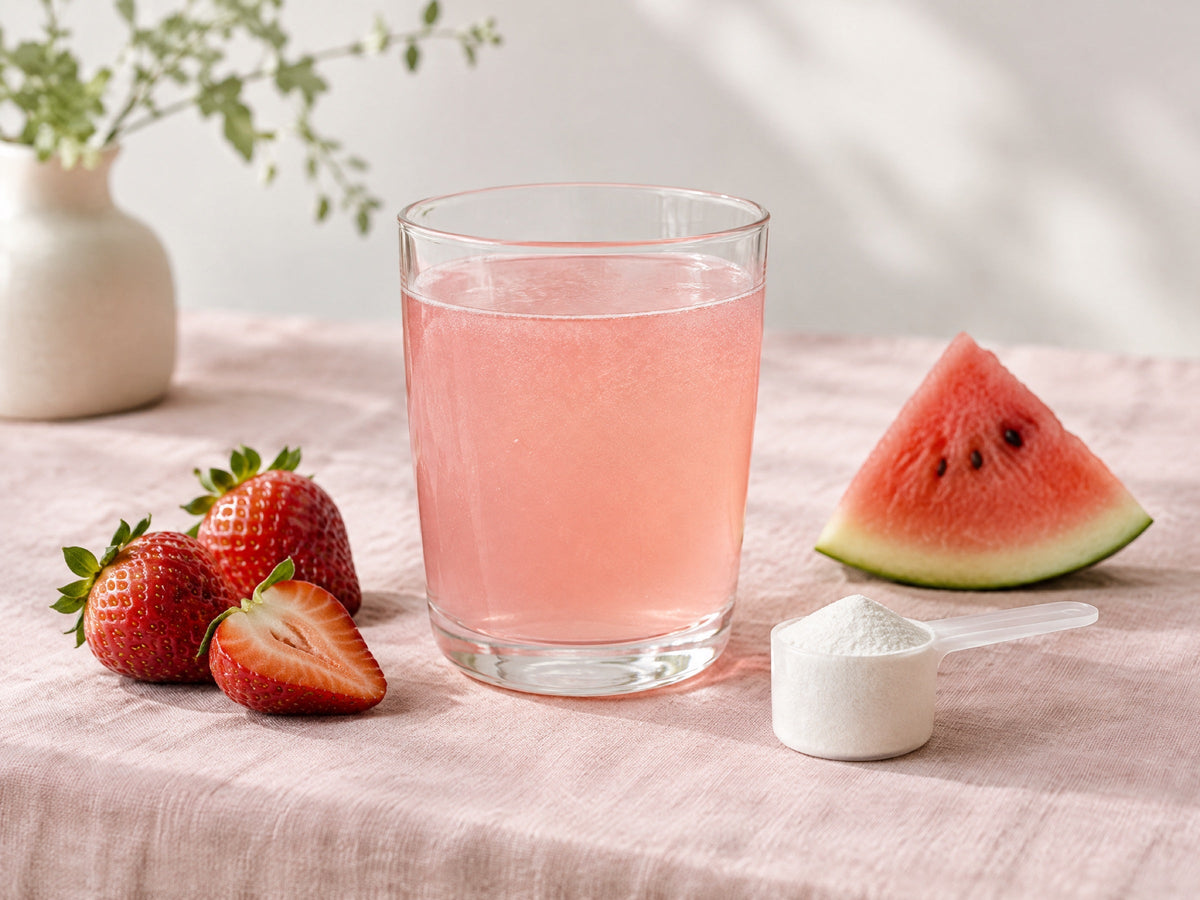
Mix one scoop into 250 ml of water. It has a Strawberry Watermelon flavour. Glow+ is made in the Netherlands, and every batch is independently tested by Eurofins for things including heavy metals and pesticides. Give it around 90 days. After that, you can keep taking it if it works for you: your body makes new collagen every day, so it needs those building blocks every day too. For a closer look at the formula, read What’s in Glow+, and why these amounts?
People kept asking if I was tired. No, that’s just what my face looks like, thanks 😂 My skin looks a bit fresher now. I went grocery shopping without foundation the other day and actually felt pretty good about it.
Nathalie
When to see your GP
Heavy legs after a long day are common. But see your GP if your legs often swell or hurt, if you have varicose veins that cause discomfort, or if the skin around your ankles changes colour. Call your GP straight away if one calf suddenly becomes swollen, warm, red or painful. It could be a blood clot in your leg and needs prompt assessment.
More about Glow+
Glow+ at a glance
- 500 mg of gotu kola per scoop, with 8,000 mg of collagen
- Refreshing Strawberry Watermelon flavour
- Less than €1 a day with a subscription
- 90-day satisfaction guarantee on your first order
Frequently asked questions
What is gotu kola?
A plant with round leaves from Asia, with the botanical name Centella asiatica. In Asia, it’s eaten as a vegetable and used as an herb. In skincare, an extract of it is called “cica”.
Does gotu kola contain caffeine?
No. Gotu kola has nothing to do with the kola nut used in cola, despite the similar names. It contains no caffeine.
Is cica the same as gotu kola?
Cica is the name used in skincare for an extract of gotu kola. You apply a cream to your skin; you take a supplement by mouth. They’re two different things.
How much gotu kola is in Glow+?
500 mg per scoop, which is one daily serving.
Can you eat gotu kola?
Yes. In Asia, people eat the fresh leaves as a vegetable, for example in a salad. In the Netherlands, you can sometimes find fresh gotu kola in Asian supermarkets. The amount you eat will vary by portion.
Why is gotu kola in a collagen drink?
Because your blood delivers oxygen and building blocks to your skin. That’s why Glow+ contains gotu kola alongside collagen, vitamin C and zinc, all in one scoop.
Can I take gotu kola if I’m pregnant?
It’s best not to. Don’t take supplements containing gotu kola during pregnancy or while breastfeeding without speaking to your midwife or doctor first.
What if I’m not happy with it?
You can get your money back. On your first order, take Glow+ every day for 90 days, then contact us within 10 days. Return all the packaging and we’ll refund what you paid, minus the cost of the return label. You’ll find the full terms in our refund policy.
*Botanical health claim pending European approval. This article is for general information and is not medical advice. Glow+ is a food supplement. A food supplement is not a substitute for a varied, balanced diet and a healthy lifestyle.
Sources
- Gohil KJ, Patel JA, Gajjar AK (2010). Pharmacological review on Centella asiatica: a potential herbal cure-all. Indian Journal of Pharmaceutical Sciences 72(5):546-56. pmc.ncbi.nlm.nih.gov
- European Medicines Agency (HMPC). Assessment report on Centella asiatica (L.) Urban, herba.
- Thuisarts.nl (NHG). Varicose veins. thuisarts.nl
- European Commission. EU Register of nutrition and health claims made on foods. ec.europa.eu


 Excellent on Trustpilot

