
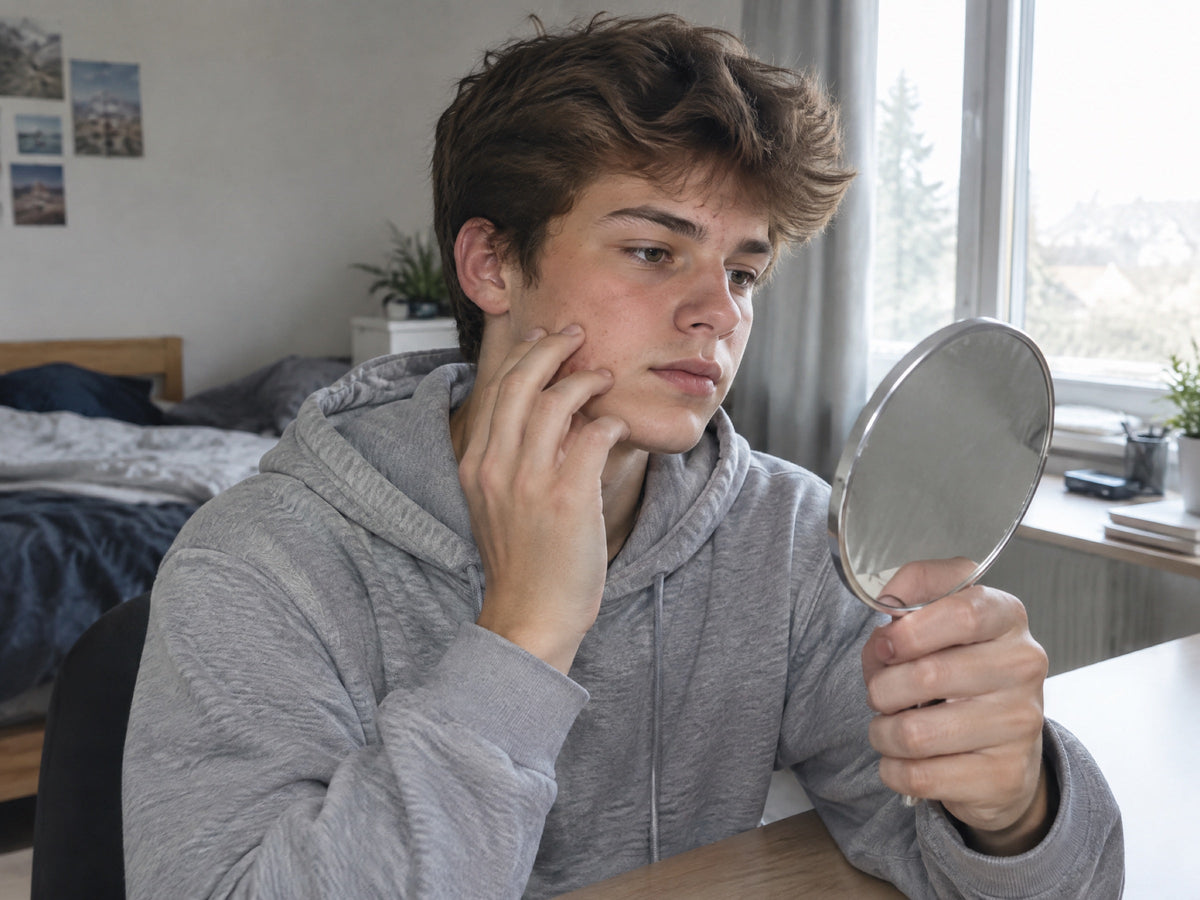
Short answer: spots during puberty are normal. Almost every teenager gets them, especially on the face, chest, back and shoulders, and they usually clear up on their own by around age 25. If your child mainly has blackheads, you can start with a gentle routine at home. See your GP if they have lots of red or yellow spots, deep or painful spots, scars or dark marks, or if their skin is getting them down.
As a parent, you might wonder: is this still normal? Or should we do something about it? One child has a few blackheads on their nose; another has lots of red spots. And your child might not want to talk about it. Here’s how to tell the difference, what you can do yourself and when it’s time to see your GP.
At a glance
- Almost every teenager gets spots. Genetics play a part.
- They usually clear up on their own by around age 25, but that can feel a long way off.
- Mainly blackheads? You can start at home.
- Lots of red or yellow spots, pain, scars or low mood? See your GP.
- Whatever you choose, it takes weeks to see a difference.
What’s normal during puberty?
During puberty, the body produces more hormones, including androgens. These prompt the skin’s oil glands to produce more sebum. Sebum is an oily substance that keeps skin supple. But too much can clog pores, leading to spots.
According to Thuisarts, almost everyone gets spots during puberty, though some get more than others. Doctors call this acne, even if it’s only a few spots. The word can sound more serious than the reality.
Where do they appear? Mainly on the face, chest, back and shoulders, where there are more oil glands. Genetics play a part, too: acne is more common and more severe in some families. If you had a lot of spots as a teenager, your child is more likely to get them too.
The good news is that spots usually clear up on their own, often by around age 25. The bad news? That feels a long way off when you’re fourteen. And in the meantime, spots can have a real impact on how your child feels.
What kinds of spots are there?
Not all spots are the same. Knowing what you’re looking at helps you work out what to do next.
- Blackheads: small dots with a black tip, often on the nose and chin. The pore is clogged but still open. The black colour isn’t dirt; it’s sebum that has darkened on contact with air.
- White bumps: small, closed bumps. The pore is clogged here too, but sealed over.
- Red or yellow spots: a clogged pore that has become irritated and red, sometimes with a yellow head.
- Deep, painful lumps: larger spots that sit deeper in the skin and last for a while.
The further down this list you go, the sooner you should see your GP. Deep spots and frequent squeezing are more likely to leave brown marks or scars. According to Thuisarts, that risk is higher with medium or dark skin than with lighter skin.
What can you see, and what can you do?
- Mainly blackheads
- Start at home
- A few red spots
- Start at home
- Lots of red or yellow spots
- See your GP
- Deep, painful spots
- See your GP
- Scars or dark marks
- See your GP
- Your child feels low about it
- See your GP
Not sure? Give your GP practice a call. That’s what they’re there for.
What you can do at home
There’s plenty you can do at home for mild spots. Thuisarts offers a few simple tips, and they’re often the opposite of what teenagers see online:
- Leave the skin alone as much as possible. Washing once or twice a day with lukewarm water is enough, optionally with a soap-free cleanser from a pharmacy or shop. Rubbing, scrubbing and washing too often irritate the skin and don’t help.
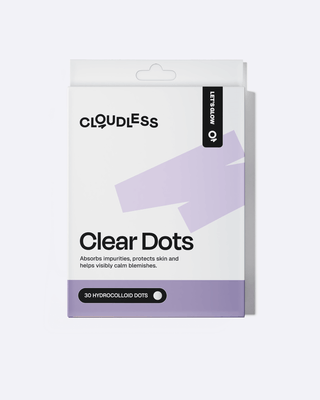
- Don’t squeeze or pick. It can cause scarring. A pimple patch can help keep hands off.
- Choose oil-free products. That includes moisturiser, sunscreen and make-up. Remove make-up thoroughly every evening.
- Protect the skin from the sun. Spending lots of time in the sun or using sunbeds doesn’t help, despite what many people think.
If your child mainly has blackheads and few red or yellow spots, Thuisarts suggests trying a benzoyl peroxide gel from the pharmacy. Apply a thin layer in the evening. It takes 4 to 6 weeks to see whether it helps, so don’t stop too soon. At first, the skin may become a little dry and flaky. Read the leaflet carefully, as the gel can bleach hair and clothing.
When should you see your GP?
See your GP if your child:
- has lots of spots with white or yellow heads;
- has deep or painful spots, including on their back or chest;
- is developing scars or brown marks;
- is still struggling after a few months of following the advice above;
- feels low, withdraws from others or no longer wants to play sport or go swimming.
That last point is often overlooked. How your child feels matters just as much as how their skin looks. Even if they have “only a few spots”, you can see your GP if they’re really struggling with them. You don’t have to wait until it’s “bad enough”.

What happens at the GP?
Many parents and teenagers put off a visit because they don’t know what to expect. Here’s a quick overview based on Thuisarts:
- First, an assessment. The GP will look at the skin and ask what you’ve already tried.
- A gel or cream. This is often the first step: a treatment applied to the skin in the evening. Sometimes a second treatment is added later.
- Sometimes tablets as well. If topical treatment isn’t helping enough, or the spots are on the back, the GP may prescribe antibiotic tablets for a while, usually no longer than 3 months.
- For girls, sometimes the pill. The standard contraceptive pill also helps many girls with their skin.
- A referral. If those treatments aren’t helping enough, the GP may refer your child to a dermatologist.
According to Thuisarts, even with prescribed treatments, you usually won’t see improvement for 4 to 6 weeks. At first, the skin may become a little dry or irritated. That’s normal. Help your child stick with it: those first few weeks are when many teenagers give up.
How to prepare for the appointment
A GP appointment often lasts just ten minutes. A little preparation can help you make the most of it:
- Write down what you’ve already tried and for how long. Include products, gels and advice you’ve followed.
- Take a few photos on bad skin days. Sometimes the skin happens to look clearer on the day of the appointment.
- Make a note of any medicines and supplements your child takes. Include vitamins, as some combinations aren’t suitable.
- Let your child do the talking. It’s their skin and their experience. You can fill in any gaps. Older teenagers may prefer to go alone.
From within: getting the basics in place
Whether or not your child sees a GP, the skin needs nutrients every day to make new cells. They come from food and reach the skin through the bloodstream. During puberty, the whole body is growing quickly, so demand is especially high.
Zinc contributes to the maintenance of normal skin. Vitamin A is also important for the skin, and the body uses vitamin B5 to make and process hormones. You can find these nutrients in foods such as meat, fish, dairy, eggs, nuts and wholegrains. But with skipped breakfasts and a sandwich from the canteen, it can be hard to know whether your child gets what they need every day.
Where Clear+ fits in
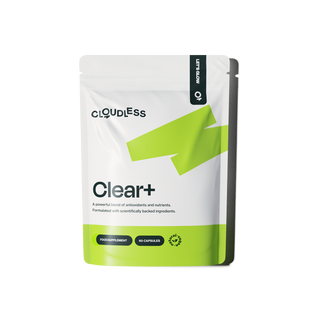
Many parents order Clear+ for their teenager alongside a gentle routine and, where needed, treatment from their GP. Clear+ is made for anyone aged 12 and over with blemish-prone skin. It’s two capsules with breakfast, containing ten ingredients including zinc, vitamin A and vitamin B5. Every amount is listed on the label, Clear+ is vegan, and every batch is independently tested by Eurofins.
If your child is taking medicine prescribed by a GP or dermatologist, ask whether it’s suitable to take Clear+ as well. Don’t use Clear+ with vitamin A acid tablets such as isotretinoin, as Clear+ also contains vitamin A. And don’t give it alongside another supplement containing zinc or vitamin A.
As with a gel prescribed by your GP, skin needs time. Give it around 90 days before assessing it. If it suits your child, it can simply become part of their breakfast routine, because the skin needs nutrients every day. Read more about the timing in How long does it take to see a difference in your skin? For tips on starting the conversation with your child, see My teenager has spots: how you can help as a parent.
She’s on her third pouch now. It really doesn’t work within a week and it needs time, but … people around her have also said her face looks clearer.
Mirjam
More about Clear+
Clear+ at a glance
- Two capsules a day with breakfast, from age 12
- Every amount on the label, tested by Eurofins
- Personal support: we reply within 24 hours
- 90-day satisfaction guarantee on your first order
Frequently asked questions
How long do spots last during puberty?
It varies from child to child. For many teenagers, their skin gets clearer after a few years. According to Thuisarts, spots usually clear up on their own by around age 25. Until then, a good routine and, if needed, help from your GP can make a difference.
Is acne the same as spots?
Yes. Doctors call spots during puberty acne, even if there are only a few. The word can sound more serious than the reality.
When should you see your GP about spots?
If your child has lots of red or yellow spots, deep or painful spots, scars or brown marks; if the advice hasn’t helped after a few months; or if their skin is getting them down.
Are spots on the back normal?
Yes. The back, chest and shoulders have lots of oil glands, so many teenagers get spots there too. Sweat, tight sportswear and a backpack can make them worse. Encourage your child to shower soon after sport and put on clean clothes.
Does toothpaste help a spot?
No. It’s a persistent myth. Toothpaste is made for teeth, not skin, and can actually irritate it. Leave the spot alone or put a pimple patch on it.
Does the sun help spots?
No. According to Thuisarts, spending lots of time in the sun and using sunbeds don’t help. Protect the skin instead with an oil-free sunscreen.
Does washing often help spots?
No. Washing once or twice a day with lukewarm water is enough. Washing too often, rubbing and scrubbing irritate the skin.
Can my child take Clear+ alongside medicine prescribed by a GP?
Ask your GP or pharmacist. Don’t use Clear+ with vitamin A acid tablets such as isotretinoin, as Clear+ also contains vitamin A.
What if we’re not happy?
You’ll get your money back. For your first order, your child needs to take Clear+ every day for 90 days, then let us know within 10 days. You can find all the terms in our refund policy.
This article is for general information and isn’t medical advice. If you’re concerned about your child’s skin, contact your GP. Clear+ is a food supplement. A food supplement isn’t a substitute for a varied, balanced diet and a healthy lifestyle.
Sources
- Thuisarts.nl (NHG). I have spots (acne). What can I do? thuisarts.nl
- Thuisarts.nl (NHG). I have acne and my GP has prescribed medicine. thuisarts.nl
- Thuisarts.nl (NHG). I have acne and am seeing a dermatologist. thuisarts.nl
- European Commission. EU Register of nutrition and health claims made on foods. ec.europa.eu
 Excellent on Trustpilot